Kyoto 3 Days Solo Traveler: SIM/eSIM Guide
By Japan Connect Guide Team · Updated 9/12/2026
This article contains affiliate links. We may earn a commission if you make a purchase, at no extra cost to you. Learn more.
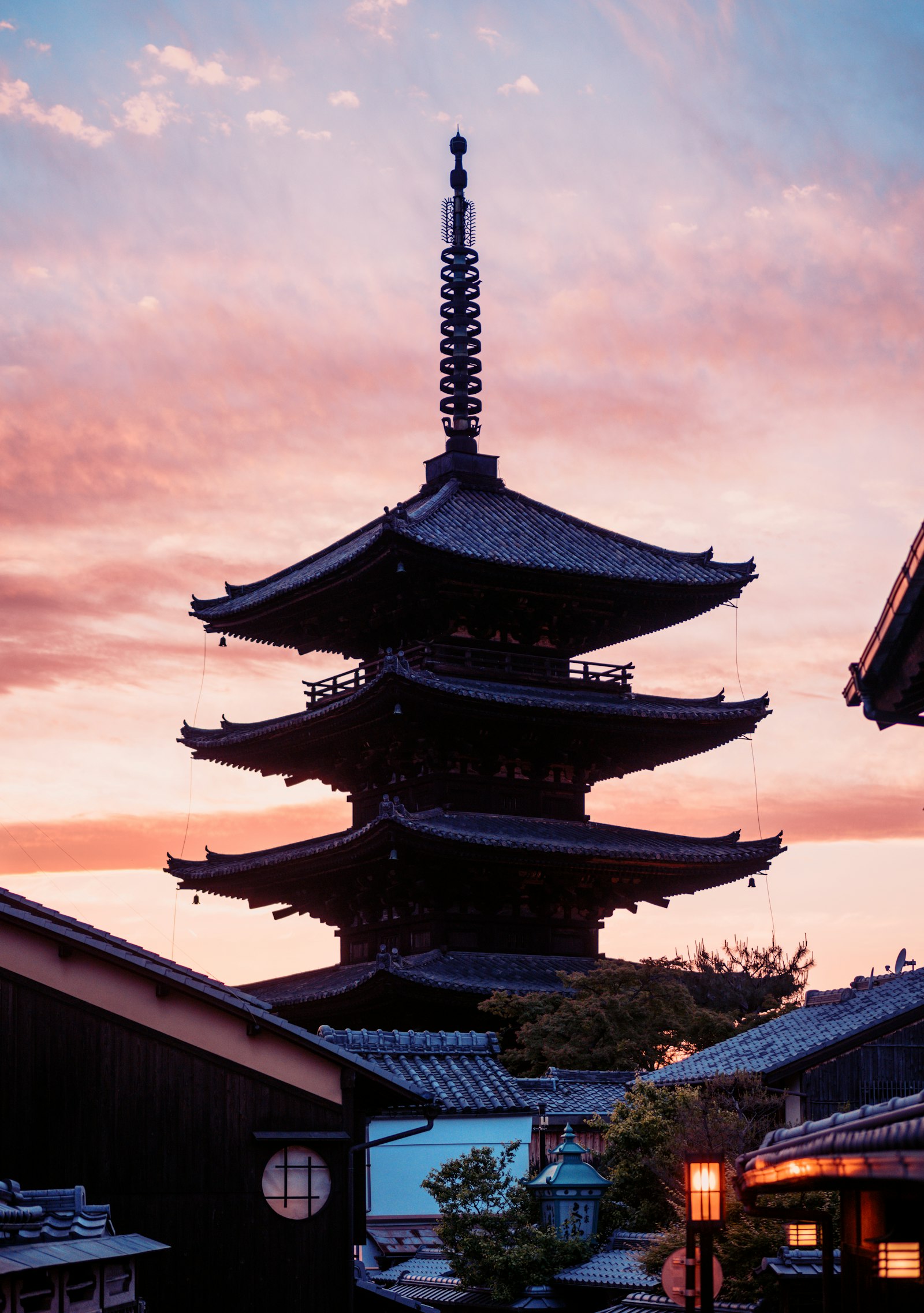
Three days is a tight budget for Kyoto, and the constraint that shapes the trip isn’t distance. It’s closing times. Many temples stop admitting visitors in the late afternoon, well before the day feels over, so a solo three-day itinerary is a scheduling exercise run entirely off your phone. That makes connectivity less about how many gigabytes you need and more about whether your phone survives the day.
Quick answer
- A power bank if the day is long, outdoors and navigation-heavy, and you have no second phone
- Mobal at ¥1,650 for 3 days if three days costs three days, against Sakura's four-day tier at ¥3,300
- An eSIM rather than a physical SIM if you want your home number live for bank and booking codes
- An offline map of central Kyoto if you would rather not depend on a captive portal at 9pm
Battery is the real constraint, not data
A Kyoto sightseeing day is long and navigation-heavy: bus routes checked and re-checked, temple hours looked up, a map open while you walk between Higashiyama sites. Screen on, GPS active, outdoors in bright light at full brightness. That pattern drains a phone far faster than a day of messaging and browsing does.
Alone, you have no fallback. In a pair, one dead phone is an inconvenience; solo, it’s the end of your ability to navigate, check a closing time, or show a reservation. The practical answer is a power bank in your day bag, and it matters more in Kyoto than in a city where you’re mostly underground between two stations.
Data-wise you’re fine. Three sightseeing days lands around 1-2GB per day even with heavy map use, so any plan in the tables below is comfortable.
Buses, alone, with no second navigator
Kyoto runs on buses more than a subway grid, and buses need looking up in a way a subway line doesn’t. Traveling with someone, one of you navigates while the other watches for the stop. Solo, you’re doing both, repeatedly, all day. That’s the single largest slice of your data use, and the reason a connection that simply works without thought is worth more here than a slightly cheaper one that doesn’t.
How much data does a 3-day solo Kyoto trip use?
| App / activity | Approx. data use |
|---|---|
| Bus route and departure lookups, repeated | ~100-200MB per day |
| Temple hours and last-admission checks | ~30-80MB per day |
| Google Translate (camera mode, temple signage) | ~20-50MB per day |
| Photo uploads and messaging | ~150-350MB per day |
Roughly 1-2GB per day, or 3-6GB across the trip. That’s comfortably inside any tourist plan, which means you should choose on price and activation convenience rather than on allowance.
Recommended options
 Mobal
Mobal940+ customer reviews, mostly positive
Verified Jul 28, 2026
Tourist eSIM, 5G Unlimited, 3 days
Unlimited (15GB hotspot/tethering cap)
¥1,650
Tourist eSIM, 5G Unlimited, 5 days
Unlimited (15GB hotspot/tethering cap)
¥2,750
Tourist eSIM, 5G Unlimited, 7 days
Unlimited (15GB hotspot/tethering cap)
¥3,850
Tourist eSIM, 5G Unlimited, 14 days
Unlimited (15GB hotspot/tethering cap)
¥6,600
Tourist eSIM, 4G Fixed, 10GB / 16 days
10GB
¥4,620
Tourist eSIM, 4G Fixed, 50GB / 31 days
50GB
¥6,600
 Sakura Mobile
1,402 customer reviews, mostly 5-star but with some complaints
Verified Jul 28, 2026
Travel eSIM, 3GB/day (docomo), 4 days
Up to 3GB/day
¥3,300
Travel eSIM, Unlimited (au), 4 days
Unlimited, hotspot cap 3GB
¥3,905
Travel eSIM, 3GB/day (docomo), 7 days
Up to 3GB/day
¥4,620
Travel eSIM, Unlimited (au), 7 days
Unlimited, hotspot cap 6GB
¥5,775
The price gap at three days is larger than it looks. Mobal prices its 5G Unlimited tourist eSIM by the exact day, so three days costs ¥1,650. Sakura Mobile’s shortest eSIM tier is four days, starting at ¥3,300. That’s roughly double, for a fourth day you won’t use and a 3GB-per-day allowance well above what a temple itinerary consumes. For a trip this short and this light on data, the per-day pricing is the decisive difference, not a rounding detail.
Mobal
¥1,650 for exactly 3 days, priced per day instead of rounded up to a 4-day tier
940+ customer reviews, mostly positive
Keep your home number alive
This is a solo-specific point worth ten seconds of thought. An eSIM installs alongside your existing SIM rather than replacing it, so your home number stays reachable while Japanese data runs on the eSIM. If a hotel booking, an airline change or your bank sends a verification code by SMS to your home number, you’ll still receive it.
Swap in a physical SIM instead and your home number goes dark for the trip. That’s usually fine in a pair, where someone else can receive the code. It’s a genuine problem alone at 11pm with a booking to confirm. Turn data roaming off on the home line to avoid charges, and leave the line itself active.
Kyoto-specific notes
Coverage is generally strong across a standard itinerary, including along the Fushimi Inari trail and through Arashiyama’s bamboo grove, where signal can weaken briefly in the hillier, wooded stretches. That is a result of the terrain rather than your carrier.
Two habits pay off solo. First, download an offline map of central Kyoto before you go. It costs nothing and covers you if the battery gets low enough that you’re rationing. Second, don’t plan on using free public Wi-Fi as your main connection. It generally needs a separate signup per session, and losing ten minutes to a captive portal matters more on a three-day trip than a two-week one.
Extending your trip, or traveling with someone else?
- ✓ See our Kyoto-Osaka 5-day couple guide
- ✓ New to eSIM? See our eSIM vs Physical SIM comparison
Sakura Mobile
Physical SIM or eSIM with docomo coverage if you'd rather buy a known daily allowance
1,402 customer reviews, mostly 5-star but with some complaints
Frequently Asked Questions
How much data do I need for 3 days alone in Kyoto?+
About 1-2GB per day, so 3-6GB across the trip, even with heavy bus and map use. Every tourist plan covers that comfortably, so price and ease of activation should decide it, not the allowance.
Is pocket Wi-Fi worth it for a solo 3-day trip?+
No. A router's advantage is splitting one connection across several people, which doesn't apply alone. It's also an extra device to carry and charge on a day when battery is already your tightest constraint.
Why does battery matter more in Kyoto than elsewhere?+
Kyoto days are long, outdoors and navigation-heavy, with the screen on and GPS running while you check bus routes and temple closing times. Solo there's no second phone as backup, so a power bank is worth more here than in a city where you're mostly traveling between two subway stations.
Will I still get SMS codes from my bank while I'm in Japan?+
Yes, if you use an eSIM. It runs alongside your existing SIM, so your home number stays reachable for verification codes while Japanese data runs on the eSIM. A physical Japanese SIM replaces your home SIM, which takes that number offline for the trip.
Going out of the city?
These are day or overnight trips from where you are based, and the plan you buy for this trip covers them.
This guide covers one trip. For arrival, coverage and what to expect across the whole city:
Related guides
Fukuoka 3 Days Solo Traveler: SIM/eSIM Guide
Fukuoka Airport is minutes from downtown, so you have no train ride in which to sort out connectivity. Here's how to land already connected, plus yatai tips and real pricing.
Updated September 12, 2026
Kyoto 5 Days Couple: SIM/eSIM Guide
Kyoto empties out early — temples close mid-afternoon and buses thin out at night. For a couple, that makes an independent connection each worth more than a shared router.
Updated September 12, 2026
Osaka 3 Days Solo Traveler: SIM/eSIM Guide
Eating alone through Dotonbori and Kuromon for three days puts your phone to work in ways a temple trip doesn't. Here's the connectivity setup that fits, with real pricing.
Updated September 12, 2026