Getting Online in Fukuoka: SIM, eSIM and Pocket Wi-Fi
By Japan Connect Guide Team · Updated 9/12/2026
This page contains affiliate links. We may earn a commission if you make a purchase, at no extra cost to you. Learn more.
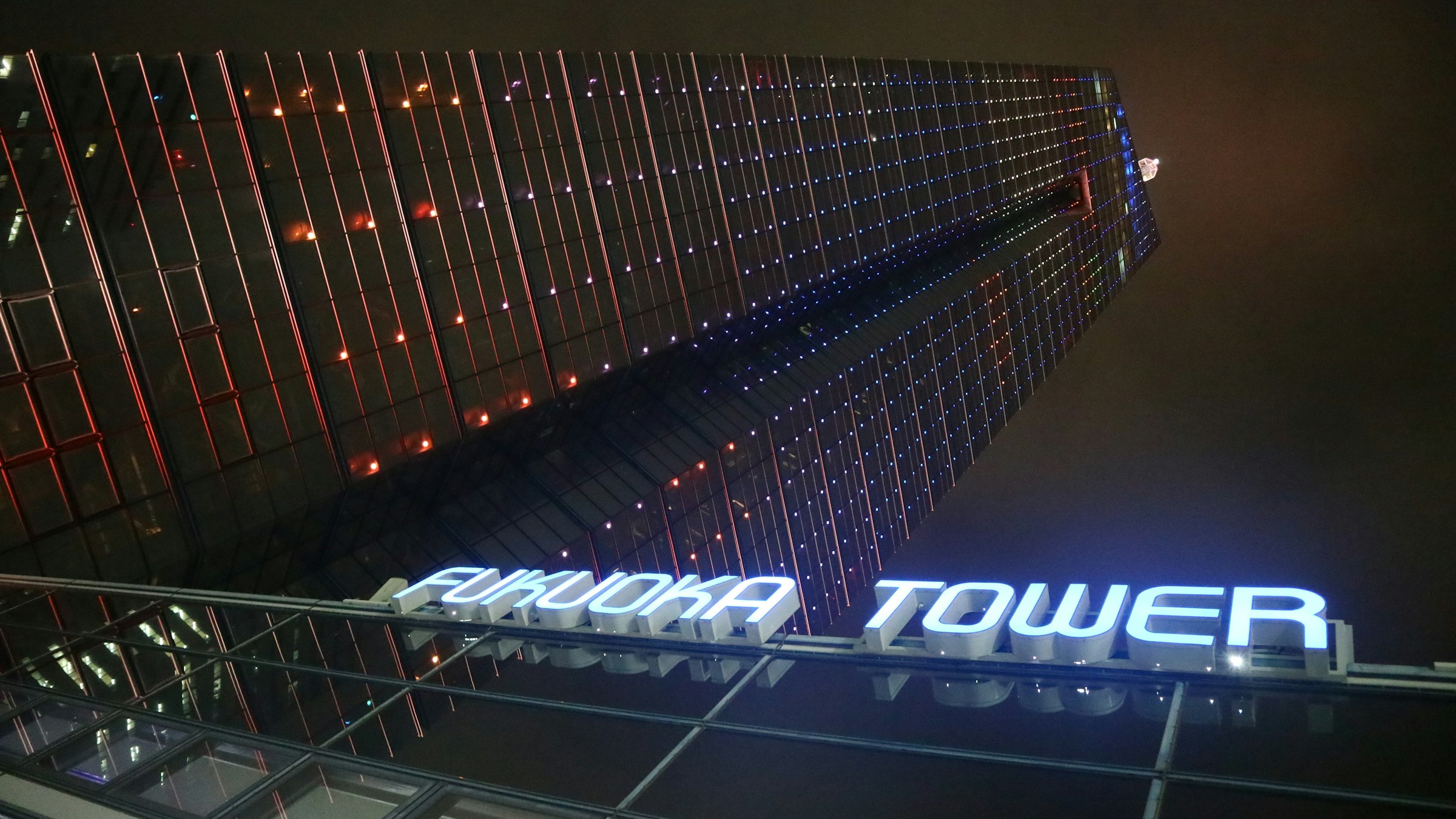
Fukuoka is an easy city to be connected in and an easy one to arrive in unprepared. Coverage is strong almost everywhere visitors go, the subway is small enough that you barely go underground, and the sights sit close together. The one thing worth arranging in advance is the arrival itself.
Quick answer
- An eSIM installed before you fly if you land at Fukuoka, which is minutes from the city with no time to set anything up
- One shared router if you are a group of five or more: about ¥1,426 each, less than half the cost of individual eSIMs
- Two individual eSIMs if you are a couple, since they come in under the four-day router rate
- Cash in your pocket if you are heading for the yatai, where cards often are not accepted
Arrival: unusually little time to sort anything out
Fukuoka Airport is a few subway stops from Hakata Station. Compare that with the alternatives most visitors to Japan are used to:
| Airport | To the city center | Time available to sort out a connection |
|---|---|---|
| Fukuoka | A few subway stops to Hakata | Effectively none |
| Narita (Tokyo) | About an hour by express | An hour |
| Kansai (Osaka) | Roughly an hour | An hour |
| New Chitose (Sapporo) | About 40 minutes by JR | 40 minutes |
At the other airports in this comparison, the ride into town doubles as time to find a counter, queue and get a SIM working before you need it. Fukuoka does not give you that, which is why an eSIM installed at home suits this city more than most. Our 3-day solo guide works through what that means if you are arriving on your own.
Arrival-hall counters do exist if you would rather collect a physical SIM or a rental router. They are simply a step you can skip here.
Where you will be, and what the signal is like
Most visitors base themselves around Hakata or Tenjin, which sit a few minutes apart and together cover most of what visitors need: the main station, shopping, and easy access to Nakasu in the evening. All of it has solid carrier coverage with few obvious dead zones.
Two places are worth knowing about, although neither is a serious problem. Tenjin Chikagai, the underground shopping street linking Tenjin’s stations, can feel slower in its lowest sections, and Canal City’s lower interior levels do the same.
Fukuoka Tower and the open lakeside paths at Ohori Park are clear throughout.
The wider point is structural: Fukuoka City Subway is relatively compact compared with the networks in Tokyo and Osaka, so you spend far less of the day underground, and the usual tunnel gaps barely arise.
Evenings and the yatai
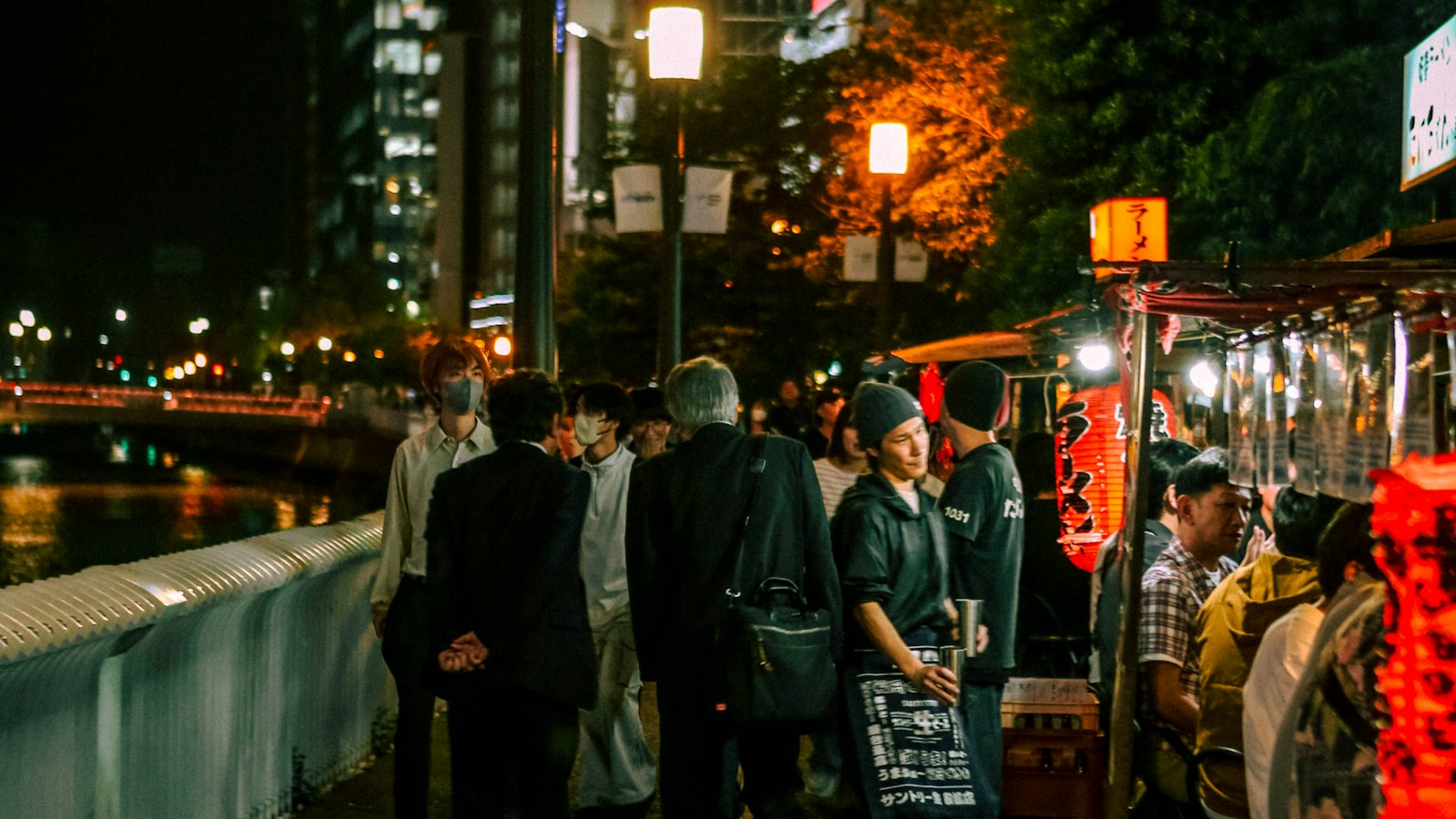
Fukuoka’s open-air food stalls, concentrated around Nakasu, run on their own hours and fill up. Finding one with space is a live search rather than a reservation, and dense foot traffic can make mobile service less consistent at peak times.
Two things are worth knowing before you go out. Many stalls are cash-only, which surprises visitors in a country where cards otherwise work almost everywhere. And if you are in a group, expect to end the night in different places at different times. Our group of six guide covers what that does to a single shared connection.
Leaving the city
Fukuoka is the gateway to Kyushu, and trips of three days or more often include a day out: Dazaifu and Nanzoin are close, Yanagawa a little further.
Coverage is generally good along the main routes, with weaker service possible in more rural stretches between towns. The constraint that catches people is the timetable rather than the signal, because regional services reduce sharply in the evening. Check the last return before you set off.

Mobal
Installed before departure, so you land connected at an airport that gives you no time
940+ customer reviews, mostly positive
What it costs
| Party | Typical answer | Cost |
|---|---|---|
| Solo | One tourist eSIM | ¥1,650 for 3 days |
| Couple | Two individual eSIMs | Under ¥5,500 for 4-5 days |
| Family of 4 | One shared pocket Wi-Fi router | ¥8,558 for 7 days |
| Group of 5+ | One shared router | About ¥1,426 per person |
Fukuoka’s compactness genuinely helps larger parties: Hakata, Tenjin and Nakasu are close enough that six people are more likely to stay together within one router’s range than they would in a sprawling city, and at that size a router is less than half the per-person cost of individual eSIMs.
For two people it goes the other way, since two eSIMs come in under the ¥6,248 four-day router rate. The pocket Wi-Fi versus SIM comparison has the full breakdown.

Sakura Mobile
Pocket Wi-Fi for a group, at roughly ¥1,426 per person over a week
1,402 customer reviews, mostly 5-star but with some complaints
How much data a Fukuoka trip uses
A reasonable rule of thumb is around 1-1.5GB per person per day. That is light for a Japanese city, and it follows from the geography: short subway rides, little time underground, and a compact center you often cross on foot. Any plan we compare covers it without you needing to think about the allowance.
Frequently Asked Questions
Why does Fukuoka's airport location change what I should buy?+
Because it removes the buffer. At the other airports in this comparison the ride into town doubles as time to find a counter and get a SIM working. Fukuoka Airport is a few subway stops from Hakata Station, so you are downtown almost immediately.
Is one router enough for six people in Fukuoka?+
For daytime sightseeing, generally yes. Most routers handle five or more devices, and Fukuoka's compact core keeps a group within range more easily than a sprawling city would. The weak point is the end of a night out, when the group scatters.
Do I need cash for the yatai?+
Yes. Many stalls are cash-only, which surprises visitors in a country where cards otherwise work almost everywhere. It has nothing to do with your connection, but it is the other thing that ruins a Nakasu evening.
Is coverage reliable on a Kyushu day trip?+
Generally good along the main routes toward Dazaifu or Yanagawa, with weaker service possible in more rural stretches. The bigger practical issue is that return services thin out sharply in the evening.
All Fukuoka connectivity guides
Worked through by trip length and party size, with current prices for each.
Fukuoka 3 Days Solo Traveler: SIM/eSIM Guide
Fukuoka Airport is minutes from downtown, so you have no train ride in which to sort out connectivity. Here's how to land already connected, plus yatai tips and real pricing.
Updated September 12, 2026
Fukuoka 4 Days Couple: SIM/eSIM Guide for a Kyushu Food Trip
Yatai stalls seat about seven people, so a couple eating their way through Fukuoka splits up more than they expect. Why that favors two connections, with the actual costs.
Updated September 12, 2026

Fukuoka 5 Days Group of 6+ Friends: Best Value SIM/Wi-Fi
Fukuoka is a nightlife trip for most groups, and a night out is where one shared router quietly fails: whoever carries it decides who can get home. Costs and options.
Updated September 12, 2026
Fukuoka 7 Days Family of 4: Connectivity Guide
A Fukuoka family week means beach days and rural Kyushu day trips — two places a rental router is easiest to lose or soak. What that costs, and how to plan around it.
Updated September 12, 2026